Saturday, April 19, 2008

Tools you shouldn't miss in this digital era !


To be frank, I am not a very well-organized person. At least not in papers. The digital evolution has saved me from all hassles and probably give me a way to live. People say I am 'hi-tech" -- I will take it as a praise if it isn't from those who don't even know what Google is. Yes, my interests and habits are alienated from my background but I don't think technology or new adventures in the net only belong to the youth group. There are certain useful tools that can make our work more efficient and effective.


Students of my classes in this term all aware that I am a great fan of Google, yes, you bet I am. The people out there are just so great to be real. The things they did just save you enormous amount of time in work. If you work in the office, you probably know what I mean.


The thing I like most is the Google Calendar, in particular when you have more than 20 invitations to be sent out. Tracking responses of invitations are not easy. Not to mention about people's wills to see who else are coming (and probably who are not; sorry to say this but I do think this matters more to certain Chinese, myself included). Ok, how to use a Google Calendar? Simply by typing the details of the function in the Google Calendar and then click share, emails will be sent out to those you invited. After that, you can rest your legs on the wheel chair, wait and see who are coming, who are not and who haven't replied -- on-line REAL TIME ! This not only helps you to manage the invitations but also let others reply based on the feedback of those they concern. (If you encounter people raise this question after you ask them whether they join the function or not -- "Is xxx coming?" or "Who is coming?", you probably know how POWERFUL this function is.) Isn't it wonderful ? I had been using this for quite a while. Here's my little obstacle : people still send me personal "EMAIL" instead of clicking the reply embedded in the email. I manage to think of two reasons : first, they would only like me, personally, to know whether they are coming or not. OR they simply not aware that the reply could be in one click and that's why they sent email as the old way. Yes, right man. Changes take times. Try it out and you probably know what I mean.


Google App Training (Google Calendar) http://services.google.com/apps/resources/overviews_breeze/Calendar/index.html
How to use Google Calendar from CNET (Video) http://reviews.cnet.com/Master_Google_Calendar/4660-10165_7-6530989.html

The second thing is about the Google Documents. At certain point, I am tired of sending out drafts for people to review and then tons of email were found in the mailbox with attachment of the "updated version". It just waste of time simply trying to match up with the amendments did by various people. Why don't we consider about putting it to the Google Doc and then sent out an email for collaborators so that we all know that the documents have been amended by who and when?

Click out this video, you will admire not only the function of Google Doc but also people's creativity and ability to present simple things in such a great way :

Google Docs Community :
http://www.youtube.com/user/GoogleDocsCommunity


I had been rest in bed and home for most of time in the previous few days -- after realizing what I did this whole morning, I thought I have recovered : at least I finally manage to do the things I like. The illness has once dragged me down to the point that I couldn't even move ! Oh god. I am back.


Video about life

There're certain reasons I love Youtube, it could stimulate learners of various types : visual, auditory as well as kinesthetic. This is also the reason why certain videos are that powerful and thought-provoking. Like this one :


Try to write have your reflective thoughts after watching the video on your journal, blogger, xanga or any kind of these. Just write.

Friday, April 18, 2008

Movie : Tokyo Tower – Mom & me, and sometimes Dad


因病休息在家好幾天,看了之前在忙亂的日子沒有好好去看的電影。

今天看了由Lily Frank(中川雅也)回憶錄改編松岡錠司導演的「東京鐵塔 我的母親父親」。翻查資料,才知道台灣的譯名為「東京鐵塔 - 老媽和我、有時還有老爸」,英文是 “Tokyo Tower – Mom & me, and sometimes Dad” 對於電影的名稱,我想英文及台灣的譯法相對於香港的更切題。


人長大了,生活總算可以之後,也就想起自己反叛的日子是怎樣與父母相處的。 這是在143分鐘後,在我心內最大的回響。


是的,初看DVD封面,再加上它的副題,不得不令我想起一些很教導式的電影。也怕觸動自己對母親的懷念,因此差不多看完其他的電影才把它拿出來看。 電影沒有用什麼刻板的教條,反之然是展現出一家三口的成長。主要是榮子(母親)與兒子(中川雅也)的故事。因著生活,榮子在城市、鄉村、城市、鄉村中穿梭,最後在大都會的鐵塔下走完人生。雅也在不同階段來來回回,與母親一起走最後的七年。最令我深刻的一幕是母親榮子在醫院裡的最後一些日子。一天以為她快要離開了;母親榮子在不太清醒的情況下,說著好些話。 「你要好好做人好好地活….什麼什麼嗎? 不是。她在蒙蒙瓏瓏中說著說著「回家也就好了…. 回家也就好了….雪櫃有天婦羅….味增湯….
蘿蔔
…..(不太肯定全部名稱,總之全是日本的食物的名子)


這能不能令人不感動? 人在遛彌之間,想到的仍了孩子的需要。這些人的名子叫母親。


Monday, April 07, 2008

University education reform: initatives and planning ahead


While education reform of College education in Hong Kong is rigorously underway, Universities in Hong Kong are all preparing for the new curriculum for the shift of 3 to 4 years of College Education.

When I read the letter from the President of University of Chicago addressing to the important issues of University development this morning, I couldn't stop myself to admire this group of great education administrators. They all have board horizon and mind to collect, incorporate and develop various kinds of programmes in the University development. More importantly, they laid out the most important issues to be addressed throughout the whole review process :

All considerations of what initiatives we take as a University must be put in the context of our fundamental values and the particular role that we play within the academy. The University is driven first and foremost by a culture of rigorous open inquiry and unrelenting analysis and questioning. The way the University has been organized and evolved over the years, the intensity of our intellectual culture, the resulting education that is so engaging and powerful, and the nature of the contributions the University has made to scholarship and to society are all derived from this focus. It is both a defining feature of the University and what we need to build upon as we consider our future.

The engine of our activity is our insistence on seeking the most original agenda-setting faculty and students at all levels with the capacity to benefit from and contribute to our academic environment. Each major step we embark upon must take into consideration how it will enhance our ability to attract and retain these faculty and students and foster the culture of inquiry that distinguishes the University.

Do we have mindset like this? What's the core elements in our planning while we set forth for the future development?

Prof Zimmer's letter is worth reading : http://president.uchicago.edu/reports/letter_032108.shtml


Photo : Hutchinson Hall at the University of Chicago


Sunday, February 17, 2008

令人痛心的照片 Heart-wreching photos

疑似藝人淫照在香港鬥得滿成風兩,作為一個有良心的香港人,我......難受了好一陣子。

一直都不想多談,直至有學生在課堂裡以「應用相關理論的學術討論」為發問原則,好的,也就談談吧。

「看到同學對學術討論的追求及應用相關理論的渴望我很欣賞,也明白同學委實對最近的新聞深表興趣,但容我坦白一點: 這則新聞和我們剛才提及的理論沒有直接的關係。」這是我的第一句回應。

然而,我很願意分享一下我個人的看法

同學問: 人們都要求那男事主出來交待一切,不是與uncertainity avoidance有關嗎?
首先,這不是什麼uncertainity avoidance 的問題。

我想是......直接一點,這也許是與我們香港人的品質更有關係。

交待,交待,是的,我們要一個交待。然而有趣的是,有一種人特別需要交代,他的名字叫「別人交待。
我們自己的行為麼,是我們的私隱。奇怪,可每個「自己」都有私隱,除了一個叫「別人」。


說下去之前,我要先declare我不認識這些明星,也沒準備深入討論他的行為,只因其他衍生出來的現象實在太有趣了。陳生的行為失當與否,只是我們用來放在前面好讓我們可以任意的去談論別人生活的一個解釋已而。 (Rationalization)

我們香港人是怎麼樣的一群的受眾,讓我們想想以下問題:

1. 如果這些照片是你一些朋友與其伴侶的照片,你會否事無忌憚的看?在公眾場合看?在公眾討論?有否丁點兒覺得看了別人的東西不對? (我們暫且不說相中人的行為是對與否)

2. 如果有人在你家中的衣櫃偷取了你的內衣褲出來,然後在世人面前展示及討論,你要否也欠公眾一個交待?

個人而言,我不認同陳的行為;但令我更難受的是我們自己香港人的反應。

是的,我們總被世界很多東西牽著鼻子走,沒選擇似的。
這幾年很多人消極的對我說: 「Jennifer 妳這麼有理想,但人人也是這樣,你改變得來嗎?」

Well, if that's the case, I am sorry about you. I am particularly sorry for those who got the opportunity to be able to read and educated.

Choice? Who said we can't make the choice?

Yes, I may not able to change the world but I decided not to let these kind of obscene materials get into my eyes and my mind. 我不看 也就是不看 !! 我是一個Visual learner,我深知眼睛看的也就進入我的意念。

我的思想以及我的頭腦,有太多更重要的事情 -- 比如別人的生命。

我支持香港有品
http://www.charactercity.hk/


Photo source : http://www.gnci.org.hk/

Tuesday, November 13, 2007

The passage of a Rwanda Genocide Survivor

Genocide, not the word I am familiar with, not to mention about the background.

Came out from the Lecture hall of the Film Education Seminar Series this afternoon, I was exposed to the world with vivid images of life from the other end of the world. For a visual learner, images always have its powerful impact. The first movie showed this afternoon was a documentary by an independent director, J.R. Rutagarama, who was a victim of the genocide in Rwanda. Within these 73 minutes, I was brought forth to the scenes of the brutal truth of life that happened in the history.


Though I do not know every details of the country, Rwanda is never an unfamiliar place. Starvation and drought, medical aids were requested to send to the place. Other than the starvation, I hardly spend time in understanding the antecedent of the event. Natural disaster seems to be taken for granted for the cause. Tracing back to its’ colonized Belgium governance, people in Rwanda was forced to be chosen for their ethnic groups – Tutsis, Hutus and some others. Civil war within Rwanda was taken place in 1994 between the Tutsis and Hutus. Over half million of Tutsis were massacred by the Hutus in 1996. In the movie, you can see how Hutus killed Tutsis alive on street like the way people killing animals. It’s thrilling. Once a Tutsis was found, Hutus would naturally go and kill him, as natural as you go and get a drink when you are thirsty. Lots of the scenes in the documentary simply made you couldn't stop having an outcry of "oh..no… could somebody do something?"


Director J.B. Rutagarama was the survivor of the Massacre who was lucky enough to be able to speak English and served as a translator for the journalists from the western countries who came to report the exile. As time passed by, people were fell short of basic necessaries, got sick and even died. Dead bodies were just everywhere – around the borders, near the road and even in rivers. The more scary thing was people around seems all got used to it. Rutagarama was lucky enough to be able to survive, fled to England and then adopted by the British journalists. After earning his degree in Film and then worked in New York for a while, Rutagarama thought it was time to go home after witnessing the 9-11 tragedy of the World Trade Centre in 2001. The movie brought us back in seeing his mom again, whom the whole family were killed by Hutus. It couldn't hold my tears when Rutagarama managed to meet her mother again after all these painful experiences. The movie interviewed some other victims and also talked about reconciliation. It was truly a great experience in walking along with a Rwarda Genocide Survivor. Also, it just brought me into the readings of the related historical facts.


Somehow, the ignorance on this brutal fact made me shameful and thereafter bred the urge in sharing it with more people. It's truly a priviledge in working on campus -- you just need to open up and then the world is there.


Movie

Back Home –

Directed by J. B. Rutagarama

http://www.afi.com/onscreen/afifest/2006/project2020/rutagarama.aspx


Trailer:


Source and further Reading

  1. By Tim Wassberg -- http://www.movingpicturesmagazine.com/departments/docspot/jbrutagarama
  2. Tutsis and Hutus conflicts -- http://www.cnn.com/EVENTS/1996/year.in.review/topten/hutu/hutu.html
  3. CNN News -- Rwanda: How the genocide happened (1 April 2004)
  4. Rwanda: How the genocide happened - http://news.bbc.co.uk/1/hi/world/africa/1288230.stm (extracted on 13 Nov 2007)
  5. Wikipedia -- http://en.wikipedia.org/wiki/Rwandan_Genocide (extracted on 13 Nov 2007)

Photo source : Wikipedia

Sunday, September 23, 2007

Wag the Dog 作大英雄


若不是因為封面上 Dustin Hoffman and Robert De Niro的名字,也許會錯過了這一套電影。


喜歡看書及電影的原因,是你在全情投入其中的一個多小時內,你一下子走進另一個國度,另一個空間。每次看過一套具啟發性的電影,思潮總是起伏不定。 電影中的真實性,可真令人看後立時想到現在的處境。

故事講及總統的幕僚為一次總統選舉前出現的性醜聞,用盡各種的方法去挽回選民對總統候選人的信心。不理事件的可真性,但那種可以為求達到目標而以假亂真的煙幕真的令人從心底裡寒出來。


中間有三首很感人的歌,唱出陣陣愛國情懷。以前我一定會為世界上有如此的人而高興。 但如果你看過這電影,你會明白一種復雜的感情是怎樣產生出來。多得監製、編劇及各演員的才能,你可以從一種應該有的心理反應而反過來覺得心痛。這情況好比你在聽一個人悲哀的經歷,心裡應是出現同情,而你的心出現的卻是猜忌。

影片不錯提供了我們對一些平常視之為理所當然的事件看法的一種反思空間,以及導演、監製、編劇及各演員都是無容置疑的一流及專業。然而把思緒沈澱後,卻不難發現影片可令一些人走往另一極端而產生把一切事件全然否定其真確性的心態。 如果我們只懂從對事物由全然接受走向全然否定,我們是否又走回舊路? 這方面值得細想細想一下。


另外,影片給我的另一個反思是我們香港人視野的問題。看看我們在報章、雜誌上我們關心的是什麼樣的事情?又或我們是在關心、是在爭取?還是在追求那份令人炫暈的個人爭勝感?我們的愛港情又是怎麼樣的一樣東西?


素養是一個重要的建基點,我想我們還是要回到一些基本處著手。

2007/9/23 香港


電影資料:

Director : Barry Levinson 巴利李維遜

Main Characters: Dustin Hoffman 德斯汀荷夫曼 and Robert De Niro羅拔迪尼路

Music by : Mark Knopfler

Relevant Websites:

Wikipedia website : http://en.wikipedia.org/wiki/Wag_the_Dog

Official Website of the Movie : http://www.wag-the-dog.com/

Other relevant Blogs that wrote about this movie:

http://blog.huanglee.net/2006/11/20/wag-the-dog/

http://blog.sina.com.tw/mabel823/article.php?pbgid=6923&entryid=11863


Saturday, May 19, 2007

Mind for the future


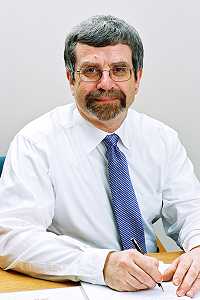
After completing a ground-breaking studies on the diversity of intelligences, Harvard psychologist Howard GARDER, is going to publish his latest studies on the five important minds to prepare the fast-moving world.

In 1983, he proposed that there should be a broader measurement on the type of intelligence than just the two parameters of logical mathematical and linguisitcs ability. In his theory of Multiple Intelligences, abilities shouldn't be only refined to certain areas but the following :

1. Musical Intelligence
2. Spatial Intelligence
3. Bodily-kinesthetics Intelligence
4. Interpersonal Intelligence
5. Intrapersonal Intelligence
6. Linguistic Intelligence
7. Logical-mathematical Intelligence

Delivering his lecture in the Longfellow Hall at Harvard University on 3 May, Prof Gardner talks about his latest book "Five Minds for the future" outlining the quality of minds required to face the upcoming challenges in the world. Gardner described the world is now more "dominated by science, distracted by technology, overwhelmed by information, and marked by the interaction of diverse cultures." To make one ready for the changes, the five minds are essential.

  • The Disciplined Mind
  • The Synthesized Mind
  • The Creating Mind
  • The Respectful Mind
  • The Ethical Mind
I would say other than the creative and synthesized mind are what our current education reform is catering of, the others are still far from being in the awareness. With information being easily access at finger tips and the widely use of internet and great access of computer, addict to online game/chat/blogs/browsing is becoming a problem for this generation. Time management is now an issue for most of the College students. For the training of respectful and ethical minds, it is not even being thought of.

Based on the few recent incidents happened on campus, Hong Kong is going the opposite way on the training of these two minds. Even at the Policy Meeting I had on University Conference Centre yesterday, I realized we are still in the stage of struggling/fighting for 'liberty' in our unique Hong Kong style though. The more we struggled, worried and the more we are thinking we are walking towards liberty, the more distorted values we are implanted on the younger generation. Based on the core characteristics of Hong Kong People, the immediate or the forefront layer of the issue is far more appealing. Against the ideas or suggestions proposed by the "Powers" are the most straight forward way to brag our braveness. No doubt, mere crying out the slogan for liberty is far easier than reading and studying the true essence of it. This is our city and our place.

I would highly expect the arrival of Gardner's book and looking forward in reading his ideas on the Respectful and Ethical Minds. These two words are probably too new for people here, as we are still in the previous stage of fighting for whatever needs we want.


Relevant Link :
  • More about Howard Gardner : http://www.infed.org/thinkers/gardner.htm

Photo source : http://www.infed.org/thinkers/gardner.htm

Thursday, February 08, 2007

Dean's Perspective on future education


By a random chance, I got access to the alumni magazine of Bowling Green University. With strong interests in knowing what's happening in different institutions around the globe, I read it with great fun. What impressed me most is the article written by Dr Donald G. Nieman, Dean of College of Arts & Science, Bowling Green University in his Dean's Perspective.


Still remember reading the previous issue of Alumni Magazine from HKU, it also talked about admitting students around the globe to expand the world vision of its current students. Nowaday, ample of Colleges are having exchange programmes while Dr Nieman's words are the few that has firm ideology on why equipping students for that.

Dr Nieman first laid out the picture of student in the class of 2010 whom will have career peak in 2030 and in the work force in 2050. What are the required qualities one needs to have in meeting the society requirement by then? They will the be group "working in a highly interdependent global in scope-form diminishing supplies of fossil fuels, climate change and nuclear proliferation to hunger, religious and ethnic conflict, and human rights. They will face intense competition from well-educated professionals and entrepreneurs in 'developing' countries like India, China and Mexico, as well as those in Europe and Japan. But in addition to competition, they will enjoy rich opportunities for economic, intellectual, scientific, cultural and humanitarian collabroations that open new possibilities for human progress on a global scale." This is the reason why we have to equip students that are able to think gobally and work with diverse culture. What a person with mission and vision!

p.s. The reading made me recalled the book of "The World is Flat" by Thomas Friedman which I read with tremble about the globalization 3.0 !

Tuesday, October 03, 2006

When the Companion meets Freud and Erikson……

Monday, 2 October 2006

Recommended by an eclectic scholar of art and media, two friends and myself stepped out of the Broadway Circuit at Cinematheque near midnight to conclude the end of long weekend. For the 2 hours before midnight, we indulged ourselves to the understanding of the ‘descending’ stage in the movie of “A Prairie Home Companion” which translated as「在睛朗的一天 收檔」in Chinese.

Probably related to my recent teaching, I couldn’t keep my mind away from the stages of human development proposed by Erik Erikson throughout the whole movie. Erikson
postulated that there are eight different stages in a person’s life. People in each stage are assigned with specific tasks, or psychosocial crises as he named it. There are certain stages that I personally do not have hand-on experience and thereafter could only tell from my observation of the others and readings. One of the stages is the “Old Age” which roughly starts from 65 years old onwards. According to Erikson, people in this stage kept reviewing their life. The sense of ego integrity, which includes our acceptance of an unique life cycle, with its own history of triumphs and failures, provides a sense of order and meaning. When one couldn’t accept their life passage, one probably ends up in despair. Somehow the movie “A Prairie Home Companion” seems providing me a chance to taste the last stage of Erikson’s model.

While senescence may not be a contemplating issue to me at this stage of life, Erikson’s concepts do provides me the framework of how to perceive it. How one go through this stage of life when there’re too many stories to tell, memories to share and people to remember. How should one face the coming and leaving? What about those issues/buildings/programmes that used to be core in our life? When time passed by, earthly things dissipate. In what position should one take while facing all these things? Senior persons are the witnesses of life changes. It’s unpalatable that they have no choice but accept as it comes. The “Angel” in the movie simply carried a symbol of ‘thought’ for this group of people who prepares the last show of the long-serving live radio programme. This “thought” comes and go like the ghost. It can mean the end of life or the end of a particular state. Meeting the ends of something probably is the main task of the senior – one scares its occurrence while the other tries to repress* its existence. The woman in pure white jacket may not come to the attentions of all the crew members of the radio programme and yet no one can deny its existence – for this group of people or the ancient building. Isn’t it served as some kind of unconscious reminders? It’s there even though you may not really able to see it through.

The struggles in this stage of life are far more than that, I am sure. I look forward to be able to transcend it in the coming 20- 30 years or getting a chance to hear from a real person, preferably growing up in the mid-west of USA in Erikson’s old age.


*Freudian suggested that repression is also one kind of ego defense mechanism.


Movie website :
http://www.aprairiehomecompanionmovie.com/

Monday, September 25, 2006

1825 days and it's beginning – a life sharing journey


How far can one walk in 1825 days? I do not have a concrete idea but for sure it is way beyond one can imagine.

Honoured to be invited for a short sharing at the Orientation Ceremony of L.I.F.E, an extended arm of the University, for 600+ Project Yijin and Foundation Diploma students at the University Auditorium on Sat, 23 Sept 2006 morning.

While my schedule was packed with classes and all different kinds of evening activities over the previous 5 days, how I hope to have a short break on Saturday morning. Not until the time when I prepared the powerpoint slides for the presentation did I realize it was instead a blessing for me. If it were not this ceremony, I wouldn't sit down and reflect upon how I started the teaching profession.

In 2000, upon an invitation of one of my previous Professors, I was teaching the first evening cohort of Springboard Programme (the then Project Yijin) on campus. Apart from the few tutorials I had helped out of for busy Professor, this is my first teaching experience in classroom on campus. People nicely praised me for my innate of teaching. I suppose the passion on people’s life is one of the biggest reasons behind. That first taste of teaching turned my life upside down: I witnessed those students at the edge returned to regular school lives. They talked and shared with me their experiences and why they were being marginalized by the mainstream education system. A young girl, I still remember her at my first day of teaching, was using her coarse language to communicate with the staff member. Putting her hands at the back pockets of the jean and used her posture to tell you : What do you want from me? Don't you ever try to tell me to keep quiet and study ! At the last class, I saw her came up with her assignment, built a more healthy self-concept and finished the course with reflection that helped her to think about life. This was truly rewarding moment. When you are so honoured to be involved to witnessed such process, you would not agree with me more. Journey of this kind is fulfilling. You were walking along with a group of people from 17 to 30s. Some came with a reason where most of the others had nothing to do or to go. There was another girl who was labeled as ‘different’ and thereafter isolated by the majority of students. She was then found sitting in the rear stairs one night – student told me and that was how I found her. We talked for a couple of hours until she has missed her last bus to Tin Shiu Wai. I asked her to take a taxi and she told me she didn't have enough money. How insensitive of me! Giving her two notes, I hoped she would take a taxi home: “Your safety is very important” I told her. She said she might not able to return the money in a short period of time and then she explained her family economic situation with water filled her eyes. One day later, I received a thank you letter with the money. I can't remember the details now but no doubt that I was moved. Sadly, she withdrew from the Programme one term later and I never see her again. By reminiscing this memory now, how I hope to see her again.

That's the beginning of the 1825 days. Probably the beginning of why I could have so many stories to share with students in classes. Ever since the one year experience of teaching evening classes, thoughts lingered. It's like your day time job was no longer be the same. Actually, even I am not the same. I asked myself why I still worked for my day time job as an Executive handling paper works everyday. What on earth made me to stay on? Of course, who would give up a job with 50% pay raise in two years, have spacious office and clerical assistance? This is unbeatable deal for young College graduate! I thought a lot during that summer while I was in study tour in San Francisco. One month after I came back to Hong Kong, I submitted a resignation letter. From the rational point of view, this was obviously not a wise choice – giving up a job with attractive remuneration and even a substantial amount of gratuity and then moved on to teaching – not to mention that it was just part-time basis for the first year. No matter what, that's my choice and this is how I started working with L.I.F.E.

The first few years of teaching were far beyond physical comfort. Carrying notes and textbooks to different teaching centres to teach (Wan Chai, Tsim Sha Tsui, Casueway Bay and Tuen Mun) was not fun. I then reached the situation that just one stable office would be satisfying. I still remember the time that I have to teach in TST in the morning while having my lunch in the bus running back to Tuen Mun for afternoon class. How grateful I met Jesus in 2003 which gave me strength to go through those days.

Five years or 1825 days have gone. My salary was still less than the figure that I remunerated in 2000 (for my previous administrative post in the University) even after earning a promotion this year. However, this doesn't strive to be important. There are far more things I got in return : I once had walked with hundreds of students at certain points of their lives and this is priceless. Like my mission statement says:

“My mission of life is not focus on being praised by my achievement but seeing the lost returning to life with dignity and self-respect.”

Other than Mr Lau, Mr Tam and Prof Chan I was deeply indebted of, I thank Lord for keep seeking me for decades. Similar to most of my students, I was once lost and then be found. Therefore, may all the praises and recognition that I got be lifted up to him – for he is our refugee and our Lord.

“And if I have a prophet's power, and have knowledge of all secret things; and if I have all faith, by which mountains may be moved from their place, but have not love, I am nothing.” (Bible; 1 Corinthians; 13:2)

Friday, August 25, 2006

Blog and education

李家同:糾正大學生電腦網路部落格的偏差行為

原文發表於台灣自立晚報 2006/05/15

【記者張志杰北縣報導】針對多數大學生沈迷﹁電腦網路文章﹂及﹁部落格﹂,暨南大學前校長李家同教授深以為不可。他說,﹁網路﹂及﹁部落格﹂的文章,有不少不合邏輯且矛盾,也沒有經過修飾、篩選與修改,反而受到年輕人的喜愛,非常糟糕。若整個社會如此,不及時加以糾正,長期下來,必然會影響學生終身的成就,更會影響國家的前途,他極力呼籲學生們要﹁唯有大量閱讀、再加上文化刺激,才能提高國家的競爭力﹂。李家同教授於十五日蒞臨真理大學演講,以﹁大量閱讀的重要性﹂為題發表演講,受到同學們夾道熱列歡迎,整個活動中心座無虛席,許多學生還坐在地板上勤作筆記。李家同教授頗具知名度,尤其他的文章經常發表在報章上,例如﹁讓高牆倒下吧﹂等文章,膾炙人口,引人共鳴,發人深省。他的文筆敏捷,針砭時事,沈澱心靈,鼓舞人心,喚醒貧困,匡世濟民,深受各界佳評。李家同率直的表示,我國有嚴重教育程度上的落差,有三分之一的國中畢業生基本學力測驗的成績低於一百分,而滿分則是三百分,真是難以想像。為什麼這些孩子學不好呢?原因之一是﹁文化刺激太少﹂,因為他們的父母不看書,孩子從小就沒有看書的習慣,更沒有接觸精緻文化的可能。但是目前各級考試都越來越活潑,題目範圍越來越廣,李家同說,這種趨勢未來會對偏遠地區及弱勢的孩子﹁首蒙其害﹂。文化刺激不夠的負面影響,學生連普通常識都不夠,學習任何課程都會有困難,包括數學、自然、社會、英文等學科。例如有不少學生數學不會做,常常是因為看不懂題目;而國中畢業生竟然不知道希特勒是誰?更不知道大學裡會有電機系,你說奇怪不奇怪。閱讀不夠多、基礎不好,很多理工科研究生竟然看不懂科學論文,有時並非因為他們專業上的程度不夠,而是因為當年沒有閱讀的習慣,李家同認為十分可惜。對於閱讀不夠的學生,他武斷地說,作文一定不會好,因為沒有好的中心思想。入學考試如果要考作文,弱勢學生一定會吃大虧。李家同發現,有不少研究生明明有很好的研究結果,卻一直寫不清楚,無法具體表達出來。他也發現許多學生的文章主旨不明,更有很多文章前後明顯矛盾,這種現象可能與現在的大學生喜歡﹁電腦網路﹂及﹁部落格﹂有關。他提醒大學生們說,﹁西方國家都會強迫學生大量閱讀,而不像我國。﹂他說,閱讀如果不夠,不僅不能寫出好文章,就連如何清楚表達自己的意思,也很困難。他鼓勵學生們要大量閱謮,包括﹁一、中外經典名著。二、好的論述文章,如社論及諸者投書。三、法官判決文和偵探小說。四、有趣味、知識性的報章與雜誌﹂。他希望全國的老師們都要推動學生大量閱讀,更希望教育部要多編列圖書經費預算,才能提升學生的能力,縮小城鄉差距,提高國家的競爭力。

Saturday, August 12, 2006

"Can Blogging Derail Your Career?" (The Chronicle Review, The Chronicle of Higher Education)

“Can Blogging Derail Your Career?” The Chronicle Review, The Chronicle of Higher Education, July 28 2006

Speculations on the possible causes to Juan Cole, currently Professor of modern Middle East and South Asian History at University of Michigan at Ann Arbor, lost his position at Yale was in Chronicle Review, The Chronicle of Higher Education. Despite with recommendation of two departments to hire him, he was finally turned down for appointment. Does blog help or ruin career of an academic? The issue was discussed by 7 bloggers including Siva Vaidhyanathan, Glenn Reynolds, Daniel Drezner, Ann Althouse, J. Bradford DeLong, Michael Berube and Erin O’Connor.

Quite a good background reading for those academics who would like to move further from surfing to blogging.

Related Websites:
Juan Cole’s Informed comment : http://www.juancole.com/
Siva Vaidhyanathan, New York University, http://www.sivacracy.net
Glenn Reynolds, University of Tennessee, http://www.instapundit.com
Daniel W. Drezner, University of Chicago : http://www.danieldrezner.com/
J. Bradfort DeLong, University of California at Berkeley, http://www.j-bradford-delong.net/
Ann Althouse, University of Wisconsin, http://www.althouse.blogspot.com
Michael Berube, Pennsylvania State University at University Park, http://www.michaelberube.com
Erin O’Connor, University of Pennsylvania, http://www.erinoconnor.org

Tuesday, August 08, 2006

What’s your craving in life?

According to Evelyn Underhill, everyone has three deep cravings: “The first is the craving which makes him a pilgrim and a wanderer. It is the longing to go out from his normal world in search of a lost home, a “better country,”, an Eldorado, a Sarras, a Heavenly Syon. The next is the craving of heart for heart, or the Soul for its perfect mate, which makes him a lover. The third is the craving for inward purity and perfection, which makes him an ascetic and resort a saint.”

For most people, starting a journey as a wanderer is already not easy, not to mention about the road heading to an ascetic. However, those who were there will definitely tell you : even you commit all your energy in life in it, it still worth it.

8 August 2006 at Hong Kong
============================================
References:

Cf. Lyle W. Dorsett (editor), The Essential C.S. Lewis, pp16

Publication of Underhill, E


  1. The Mystic Way. London, 1913.
  2. Practical Mysticism. London, 1914.
  3. The Essentials of Mysticism. London, 1920.
  4. The Mystics of the Church. London, 1925.

Monday, July 24, 2006

Vision for Community Colleges in Hong Kong?

Re-read the article entitled “A call to action : reclaiming our competitive advantage” by Frank Gornick published in the Community College Journal December 2005/January 2006 this morning.

Community College in United States was established in facing the society's need for skilled labour force for transformation from manufacturing-based industry to the knowledge-based economy in the 1940s. President Truman envisioned the needs and thereafter commissioned the Higher Education for American Democracy in 1947. With its sustained development in the previous 50 years, the role of Community Colleges has made significant contribution on the development of economy as well as human resources of the nation. The participation rate for College education raised from 8% in 1940 to 65% today.

While expertise convened the “Hundred Year Bloom”in southwest California before the end of 2005, I would love to see this kind of strategic gathering be in placed in Hong Kong. The system of Community College is still going through struggles at its early stage of development. As one of the little tigers in Asia, Hong Kong emerged business into the return of education. Most people here in Hong Kong put too much the emphasis on the direct return of an academic qualification. It is sad to see that people regard this new education framework as the stepping stone for the failure in HKALE (University Entrance examination) in accessing to University. If President Truman still alive, I wonder how he will think about this situation? Will the international renowned education gurus mourn for the current development of Community College in Hong Kong? Being a member in the sector for years, I believe it worth all of us to reflect on.

Education is only an individual pursuit but a nation's asset, I remain.

Fung-yee LEE
24 July 2006


Reference :
GORNICK F., "A Call to Action:Reclaiming Our Competitive Advantage" Community College Journal, December 2005/January 2006


Other sources:
American Association of Community College - http://www.aacc.nche.edu/


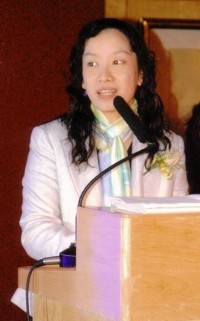
Jennfier Fung-yee LEE is currently College Lecturer in The Community College of Lingnan University, Hong Kong. She has worked as Administrative Officer in University department before joining the external programmes in 2000. With diverse experience in University as administrator, lecturer as well as hostel staff member, she loves interacting with wide array of students from Project Yijin, Foundation Diploma, Associate degree, undergraduates up to postgraduates. She resides on University campus for more than 10 years and concurrently serving as Senior Hostel Tutor for University students.


Thursday, July 20, 2006

06 National Academy of Education/Spencer Fellows

The National Academy of Education has announced its Spencer Fellows for 2006 and they are all working on critical education issues:

Eileen Anderson-Fye, Case Western Reserve UniversityCultural Change, Mental Health & Academic Achievement

Douglas Clark, Arizona State UniversityInternational Analysis of Students' Knowledge Structure Coherence

Joseph Crespino, Emory UniversityAmerican Kulturkampf: Evangelical Christian Schools and Modern Conservatism

Jimmy de la Torre, Rutgers, The State University of New JerseyDesigning Assessment to Support Learning: A New Approach to Test Construction and Analysis

Sara Goldrick-Rab, University of Wisconsin-MadisonInvestigating the Postsecondary Transitions of Urban Public School Students

Nora Gordon, University of California at San DiegoCompetition for Contracts with Public Schools and Districts: How Much is There, and Does It Matter for Students?

Matthew Hartley, University of PennsylvaniaAdvancing the Civic Purposes of Higher Education: An Examination of an Educational Reform Movement

Wendy Hoglund, New York UniversityBuilding Family-School Connections: Modeling Pathways to Children's Educational Outcomes

Guanglei Hong, University of TorontoTreatment Effect Estimation in Cluster Randomized Experiments in the Presence of Partial Implementation

Robert Kunzman, Indiana UniversityReligion, Home Schooling, and Civic Education: Implications for American Democracy

WanShun Eva Lam, Northwestern UniversityThe Role of Transnational Digital Communication in Adolescent Immigrants' Language, Literacy and Identity Development

Katherine Magnuson, University of Wisconsin – MadisonGoing Back to School: Do Children Benefit When Mothers Obtain Additional Education?

Patrick McEwan, Wellesley CollegeThe Educational Impact of Large-Scale School Feeding Programs

Margaret Nash, University of California, RiversideHigher Education for Women and the Formation of Gender, Class and Race Identity in the US, 1840-1875

Alina Reznitskaya, Montclair State UniversityStudent Thought and Classroom Language: Investigating the Connection

Aaron Saiger, Fordham University School of LawReimagining Educational Localism: Periodic Redistricting of Public Schools

Aaron Saiger, Fordham University School of LawReimagining Educational Localism: Periodic Redistricting of Public Schools

Kim Warren, University of KansasEducation for Citizenship: African-Americans and Native Americans

Tonya Wolford, University of PennsylvaniaThe Effect of Spanish Fluency and Syntactic Processing on Reading In English

Xiaogang Wu, Hong Kong University of Science and TechnologyThe Household Registration System and Educational Attainment in China: A Causal Analysis

Link : http://www.naeducation.org/Spencer_2006%20Fellows.html#TopOfPage

Saturday, June 17, 2006

Reflection on Prof Geoff Whitty's Lecture of Towards a new Teacher Professionalism


"Towards a new teacher professionalism" by Professor Geoff Whitty, Director, Institute of Education, University of London

20th Anniversary of University of London Institution of Education Old Students' Association at City University of Hong Kong, 17 June 2006

Attended the lecture this morning and it's really thought provoking.

I have to admit that the main reason of my attendance is because of the dissussant of Prof Kai-ming Cheng, Professor at Faculty of Education in The University of Hong Kong, a great mentor opened my horizon on the realm of qualitative research. Though the lecture is to remark the 20th year of anniversary of the University of London Institution of Education Old Students' Association, I found some familiar faces, mostly current postgraduate students, from the Faculty of Education at The University of Hong Kong.

Prof Whitty shared with us his idea on the development of teacher professionalism. In 1950 -70s, the 'golden age' of teacher profession in United Kingdom, teachers have the maximum control towards the course delivery. During this period, teachers were granted with the freedom to decide not only what to teach but how to teach. Situation changes with the rapid economic development and demand of evident-based result in Education. Therefore, the teacher professionalism shifted from 'Traditional' to 'Managerial'. Teaching practice was later depended very much upon the government policy and guidelines. Teacher's authomoy was therefore erosed. During this stage, Managerial liers were created in and outside the school, making teachers' a paragdim shift on the course delivery. Prof Whitty then argued for the new professionalism of teachers: from traditional to collaborative and demoncratic professionalism.

The democratic society is moving us to take different shakeholders' point of views in our daily life, education is not an exception. Nowaday, when we make decision in education setting, not only do we need to take the funding organisation, the government and the management of the school into consideration but also the current students, parents as well as prospective students. Therefore, it is bascially not a new professionalism but a re-professionalism. The managerial professionalism, though having their drawbacks, did offer us an alternative prospective in seeing the teachers profession development, Prof Witty said.

When being reminded of the new paradigm of the teachers professionalism, I somehow realized the participation of the self-financed sector in higher education may be pushing the development even faster. In Government funded institutions, changes required considerable discussions at various levels of the management. However, the self-financed sector survived depends very much on the the immediate response and feedback of the shakeholders. These of course include the clients and the persons who are financing their education, i.e. parents. Some types of shakeholders, like the current or the prospective students, are not commonly the major shakeholders of the regular funded institutions, at least before the government's funding cut on Universities in these years.

Professsor K M Cheng asked a very inspiring question before the end of his discussion which worth thinking seriously :

When we are talking about the new teacher professionalism, are we thinking of the existing teachers being renewed ? Or we are actually having a new generation of teachers?

In my humble 10 years working expereinces in University and its extension arm, I personally did experience changes in the previous decade. Teaching staff members in higher education used to pay more attention on research and their own area of interest than students feedback and comments. Of course they love the students and may passionately in sharing their views with them during lectures, student-based teaching was the agenda on a few academics only. With the development of University extension on providing self-financed programmes, I see the role of the teaching staff has dramatically changed. Not only do the teachers in this new sector need to transfer knowledge but also need to mind greatly on students' feedback. These feedback, among other things would be considered crucial by the senior management, in particular during personal actions like promotion or renewal of contract. Therefore, there's a group of new teachers who know to present their concerns and ideas with vivid activities and demonstration. My personal experience told me that those teachers who still in the nostalgia of postgraduate studies is ususally the first group of teaching staff members be regarded as 'ineffective' teachers. Students in the self-financed mode of studies, particularly the Assoicate Degree one, are mostly far from being a self-regulated learner. Most of these students ask for the taste of University education before having corresponding intellectual and language proficiency. Therefore, they would need diverse teaching methods with animiated presentations, discussions and illustration that can fill up the gaps between their ability and the course requirement. In sum -- a different teaching style from the regular College programmes and thereafter different types of teachers.

After this Anniversary lecture, I postulate that the shift in the role of teachers in the self-financed higher eduation sector will be the fuel on the development of other sectors towards this new development of teacher professionalism.

Thursday, June 01, 2006

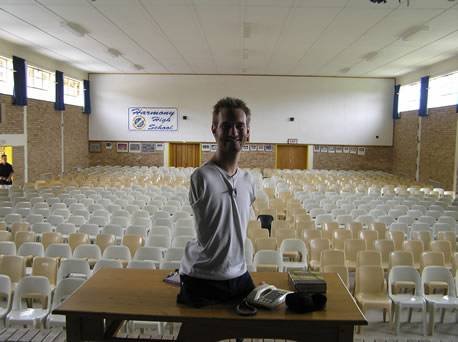
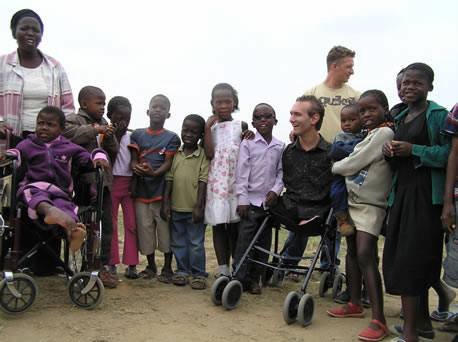
Story of Nick Vujicic


(This is an email I received on 28 May 2006 and it's so thought-provoking)

My name is Nick Vujicic and I give God the Glory for how He has used my testimony to touch thousands of hearts around the world! I was born without limbs and doctors have no medical explanation for this birth "defect". As you can imagine, I was faced with many challenges and obstacles. "Consider it pure joy, my Brothers, whenever you face trials of many kinds." ....To count our hurt, pain and struggle as nothing but pure joy? As my parents were Christians, and my Dad even a Pastor of our church, they knew that verse very well. However, on the morning of the 4th of December 1982 in Melbourne (Australia), the last two words on the minds of my parents was "Praise God!". Their firstborn son had been born without limbs! There were no warnings or time to prepare themselves for it. The doctors we shocked and had no answers at all! There is still no medical reason why this had happened and Nick now has a Brother and Sister who were born just like any other baby. The whole church mourned over my birth and my parents were absolutely devastated. Everyone asked, "if God is a God of Love, then why would God let something this bad happen to not just anyone, but dedicated Christians?" My Dad thought I wouldn't survive for very long, but tests proved that I was a healthy baby boy just with a few limbs missing.
Understandably, my parents had strong concern and evident fears of what kind of life I'd be able to lead. God provided them strength, wisdom and courage through those early years and soon after that I was old enough to go to school. The law in Australia didn't allow me to be integrated into a main-stream school because of my physical disability. God did miracles and gave my Mom the strength to fight for the law to be changed. I was one of the first disabled students to be integrated into a main-stream school. I liked going to school, and just try to live life like everyone else, but it was in my early years of school where I encountered uncomfortable times of feeling rejected, weird and bullied because of my physical difference. It was very hard for me to get used to, but with the support of my parents, I started to develop attitudes and values which helped me overcome these challenging times. I knew that I was different but on the inside I was just like everyone else. There were many times when I felt so low that I wouldn't go to school just so I didn't have to face all the negative attention. I was encouraged by my parents to ignore them and to try start making friends by just talking with some kids. Soon the students realized that I was just like them, and starting there God kept on blessing me with new friends. There were times when I felt depressed and angry because I couldn't change the way I was, or blame anyone for that matter. I went to Sunday School and learnt that God loves us all and that He cares for you. I understood that love to a point as a child, but I didn't understand that if God loved me why did He make me like this? Is it because I did something wrong? I thought I must have because out of all the kids at school, I'm the only weird one. I felt like I was a burden to those around me and the sooner I go, the better it'd be for everyone. I wanted to end my pain and end my life at a young age, but I am thankful once again, for my parents and family who were always there to comfort me and give me strength. Due to my emotional struggles I had experienced with bullying, self esteem and loneliness, God has implanted a passion of sharing my story and experiences to help others cope with whatever challenge they have in their life and let God turn it into a blessing. To encourage and inspire others to live to their fullest potential and not let anything get in the way of accomplishing their hopes and dreams. One of the first lessons that I have learnt was not to take things for granted.


"And we know that in all things God works for the best for those who love Him." That verse spoke to my heart and convicted me to the point where that I know that there is no such thing as luck, chance or coincidence that these "bad" things happen in our life. I had complete peace knowing that God won't let anything happen to us in our life unless He has a good purpose for it all. I completely gave my life to Christ at the age of fifteen after reading John 9. Jesus said that the reason the man was born blind was "so that the works of God may be revealed through Him." I truly believed that God would heal me so I could be a great testimony of His Awesome Power. Later on I was given the wisdom to understand that if we pray for something, if it's God's will, it'll happen in His time. If it's not God's will for it to happen, then I know that He has something better. I now see that Glory revealed as He is using me just the way I am and in ways others can't be used. I am now twenty-three years old and have completed a Bachelor of Commerce majoring in Financial Planning and Accounting. I am also a motivational speaker and love to go out and share my story and testimony wherever opportunities become available. I have developed talks to relate to and encourage students through topics that challenge today's teenagers. I am also a speaker in the corporate sector.
I have a passion for reaching out to youth and keep myself available for whatever God wants me to do, and wherever He leads, I follow. I have many dreams and goals that I have set to achieve in my life. I want to become the best witness I can be of God's Love and Hope, to become an international inspirational speaker and be used as a vessel in both Christian and non-Christian venues. I want to become financially independent by the age of 25, through real estate investments, to modify a car for me to drive and to be interviewed and share my story on the "Oprah Winfrey Show"! Writing several best-selling books has been one of my dreams and I hope to finish writing my first by the end of the year. It will be called "No Arms, No Legs, No Worries!"

I believe that if you have the desire and passion to do something, and if it's God's will, you will achieve it in good time. As humans, we continually put limits on ourselves for no reason at all! What's worse is putting limits on God who can do all things. We put God in a "box". The awesome thing about the Power of God, is that if we want to do something for God, instead of focusing on our capability, concentrate on our availability for we know that it is God through us and we can't do anything without Him. Once we make ourselves available for God's work, guess whose capabilities we rely on? God's!

May the Lord Bless you

In Christ, Nick Vujicic

Life without Limbs:

http://www.lifewithoutlimbs.org/

Sunday, May 28, 2006

Moment between edges

There's one thing on earth that can make people become very productive – it is called

deadline.


Sunday. Time is now 20:15, the office is so quite, since noon time.


In the coming few hours, I probably will still be here to complete another "mission". Did go out for an hour dinner break. Read the current issue of Chinese Today and be reminded that jogging is good for health, I then walked for 10 minutes before returning to work.

Back to office and checked the new emails. There’s one from Australia. Ever since then, the mind raced and became unsettling. I used to receive update from him directly and now it's from an unfamilar email address –

===========================
Dear All,

I'm writing on behalf of Uncle Wing and the family - since his last email I'm afraid things have taken a turn for the worse.

He was admitted into Westmead Hospital on Thursday afternoon (25/05/06) - he had become increasingly disorientated, and since Wednesday evening couldn’t keep any food or fluid down - it was decided that he would be more comfortable at the hospital.

Since then his condition has varied. He drifts in and out of consciousness - most of the time he’s awake he responded to us and seems aware of visitors coming in and out. Two nights ago he even managed to give us hugs and kisses, though since then he has mostly been asleep or in a restless slumber.

The family is with him at all times and the nurses at Westmead have been most accommodating. We know in these last days the most important thing is for him to be at peace ­ thankfully he doesn’t seem to be in much pain and is attended to regularly.

I know your thoughts and prayers are with him, thank you and please forward this to any of Uncle Wing’s friends I may have missed ­ I will update again when we have further news.

As he says, Cheerio for now


=============================

Somehow I scare to read towards the end subconsciously, scaring to know something that should be well prepared of. I then took out the photo stand on the side table and it said :

「人就是賺得全世界,卻賠上自己的生命,有甚麼好處呢?」Mark, 8:36
Treasure your health, though among the roughest work schedule, God told me.

After 5 seconds, I closed my eyes and prayed for my respected mentor -- May peace be with him in this significant period. How I would love to be by his bedside now and pray for him personally.

“Dr Lee, I love you and I……” Water filled my eyes and I can't continue.


Isn't people all out of words while facing certain moments?

Saturday, May 20, 2006

Last MEd class


The last MEd class at HKU ended tonight.
Seems a bit sad to say goodbye to formal classes and yet this last one was very stimulating.

The topic that we discussed tonight in the course of "Global Perspectives on Education in Hong Kong" was about how education shall react in this emerging globalized world. As this is probably the only last class in HKU tonight (all the classes should have been completed except ours were postponed for two weeks), we got the bonus of moving to another room with the elegant classic big oval meeting table and upholstered armchairs for every one of us. It looks like a meeting room for board members ! How Prof Postiglione rewarded us in such a nice way. To began with, Prof Post mentioned about the practice of an elite high school (Exeter) in the States where students are not learn in regular classroom seating but around one big table so that everyone can see each other. When Prof Post asked us why Exeter made such seating: I thought it was because their conception of learning is different. The school administrator must believe that all students have their own ability and talent so that significant intellectual exchange is possible via round-table discussions. How powerful furnishing can alter learning! Therefore, I thought the reward for tonight should not stop at the cosy armchairs but the discussion followed. It was confirmed in two hours time.

Truly, it has been the greatest section that I ever had. Throwing up a question of “What are the things needed for education in facing the globalized world? by Prof Post, we all came up with different ideas and it's like a brainstorming gathering for senior management group at the top floor of the IFC. The discussion was started by a secondary teacher who thought computer knowledge should not be neglected in this decade. While other classmates with diverse background argued that learning from teachers who are from different countries helped. Well, I would say this is the most diverse, in terms of the background of the students, that I ever had. In this class, we have full time PhD students from Russia, Tanzania, Han Chinese as well as minority Chinese. For MEd students, we have teachers from secondary schools, primary schools, international school and administrator from the Education and Manpower Bureau. In terms of ethnicity of the MEd students, there are Canadian, British Chinese and local Hong Kongese. Isn't it the best group to discuss the topic of globalization?
The hottest discussion was on the article of “How Education Changes – consideration of History, Science and Values” written by Professor Howard Gardner. Mutter from Tansania argued that other than the contents and the methods should be our focus of discussion, we should also review on Garnder's remark “My recommendation in this area is to cut down radically on the number of subjects to mater in precollegiate education: I would favor all students learning at least one science, one area of history, one art form, expression and appreciation in their own language, and especially in countries where the principal language is not widely spoken beyond its borders, expression and appreciation of English.” Mutter emphasized that instead of accepting as it comes, shouldn't we think it over --- why “English?” He postulated that language is vital and powerful tool in the process of teaching and learning. If the principal language is not widely spoken, why Gardner concurred only on English but not the others? Good question. It usually leads to fruitful discussion and we did.

By reviewing through Gardner's article as the base, I agreed that interdisciplinary studies and cross-cultural learning are the direction of further learning. Education for globalization will craft hybrid identity which providing an edge for having the ability in comprehending problems and situations from different perspectives in the coming future. By incorporating this information in mind, I started realizing why there are lots of struggles or grievance over different issues in education. Either it's the College students complain about not learning much from their lecturers, or secondary school teachers' fatigue over workload and new curriculum, there must be criticism. Never did one think the reason could be that simple: We all are at the stage where old ideas and new ideas emerged. From spoon-feeding to scaffolding, it just takes time for the adjustment.

Not until this very last class did I realize lots of classmates have great ideas to share , in particular those who came on time towards the very last class. It's awesome to finish my MEd classes in this way. I thank Prof Post for his teaching and faciliation on the class discussion.

This is the end.

Or may be not.

This is just a beginning of another chapter in intellectual development.

Reading :
H Gardner (2004), “How Education Changes – consideration of History, Science and Values” in Marcelo M Suarez-Orozco and Desiree Baolian Qin-Hilliard (Ed), Globalization – Culture and Education in the New Millennium, L.A. : University of California Press, 235-258