Showing posts with label Teaching. Show all posts

Friday, May 09, 2008

It matters more how you depart

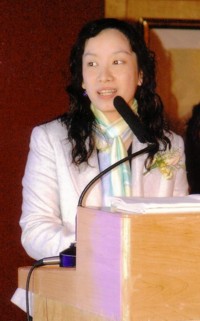
(see the below note about the photo)

“This is my last presentation in the Associate Degree Programme.” Daniel, Joseph and Kasa told me after the Q&A section on a Friday afternoon of the last teaching week.

Ever since then, I couldn’t stop thinking about them.

I taught Daniel and Joseph three years ago when they first entered the Community College in pursuing their Pre-Associate Degrees. That was right after the Waterloo battle in the HKCEE in 2005. It never occur to me until this very last point that Daniel & Joseph were my students in their first term in the College as Pre-AD students and now in their last terms as the graduating Associate degree students. Throughout marking their last project presentation in the AD Programme, lots of memories flashed in. How did they manage the previous 1000+ days at a Community College craving for a higher qualification?

With different voices in the general public about the academic framework of the Associate Degree, I have a strong sense that people somehow neglected the most important element in eduction throughout the discussion -- the developmental process. Fortunate to be a witness of the process, I couldn't help myself but pleased to see how this group of youth develop and enrich, like Daniel, Joseph and the others did. Why we always have to evaluate a group of adolescents by mere figures? Do we really understand the ‘quality’ of the Associate Degree students or even graduates?”

Everybody is talking about articulation rate. Everybody is talking about whether one gets into an undergraduate degree programme. The GPAs. The tuition fees. In short, all numbers and figures. As Lecturer as well as Administrator of Associate Degree Programme, I have no difficulties in understanding the cruel reality. However, can our general public gives more room for love and care about the developmental process of these groups of students? Can we treasures more and show supports to their significant changes in the value-added process?

Instead of acting as a critic for the education policy, I would rather spend times in the more challenging and rewarding work for real education.

I decided to write about their stories.

Yes, a story that worth knowing and recognizing. A story that about life and about growth.

Not educated as a linguistic or trained as a journalist, these stories may not be written in a professional manner. However, I remember reading a writer encouraged readers in her book– just write with your heart, something from within, something that has driven you and enlighten you. Just write. Yes, this is what I am going to do. Like many of my students who adventure in their AD studies, I am pioneering in the realm of writing. Yes, I may fail, I may not be successful and I may not receive any recognition from whatever areas the earthly people treasure. It still worth trying, at least for this courageous group of students of mine.

“No matter what happen (either you get into the undergraduate programme or not), remember I told you this here, YOU ARE WORTHY!” I told my student Kaman, also a graduating AD student who somehow came in my office for a lunch invitation while I was writing this piece of work. I remember her face when she left and closed the door of my office -- the red and watery eyes.

They don’t need mere teaching but authentic love and care.

“It makes little difference whether you enter as a mediocre student or one who has achieved honors. It matters more how you depart.” Mark Johnson, a former AD graduate and now motivational speaker said.

Yes, it all matters how you depart.


*About the Photo:

I found that I didn't take photo with Daniel, Joseph and Kasa on their last presentation. The photo above was taken at one of the last AD classes in Dec 2005. Some of them are now in their Second year of the undergraduate programme and that's why I still see them on campus. Would love to know how the others are doing. If you somehow in the photo and saw this post, write me email and let me know your update. (Lu.jenLee@gmail.com)

References :

About Mark Johnson : http://www.markthespark.com/community.html


Wednesday, May 07, 2008

學生寫我 我寫學生

(真是愧對Jacqueline同學,數月前已說會將她那篇寫得很真摰的文章放在網誌中,到現在才放上來,望她勿見怪。Jackqueline,妳的老師也覺得妳寫得很不錯,Keep up the good work. )

不是我的全部

於採訪前一天,向李鳳儀老師(Jennifer)拿了些背景資料,當中包括了她的個人網誌。細閱下,其中紀錄了她的教學生涯。我想,她的教學生涯可以用「豐富」來形容。

棄厚薪投身教育界

在嶺大工作已有十一個年頭,開始時是全職負責大學的行政工作,並兼任宿舍導師、與大學生一起住在校園。2000至2001年,是Jennifer在工作上的轉捩點。當時有一位老師策劃毅進計劃,目的是幫助學生認清目標,發掘每個學生的潛能。「那時我很認同這位老師的意念,後來他邀請我教毅進的晚間課程,我覺得自己也能夠應付,就開始了我的教學生涯。後來更把行政工作辭去,全身投入教學。」

很多人都覺得她當時的決定是不智的,因為大家都認為轉行後很難有優厚的待遇。「我的決定沒有錯,雖然高薪是很多人所嚮往的,但對於我來說,生命不能只用金錢來衡量。」那麼生命的重量來自哪裡?「未轉換工作前,我覺得自己是一部e-mail machine。行政工作只能維持大學文件上的系統,但教書是在做有關生命的事。」可見教育能夠給她生命的重量,更屬於生命的一部份。

溝通不是理論

Jennifer曾修讀過Youth Counseling和 催眠等課程,但她現在覺得那些溝通技巧已不太重要。從前,她能靈活運用那些技巧去控制學生的反應,從而幫助他們解決問題。「但認識神後,我學會用心去愛他 們。溝通技巧不是最重要的,現在我衷心希望其他人的生命有所改變。」用心去交流,真誠去對待每一個人,讓生命與生命之間產生化學作用,筆者認為這種教學態 度是可貴的。

她覺得最大的得著是可以和不同的學生有生命上的交流。她可以分享到其他人的生命,陪伴他們成長,始終年青人是需要人去陪他們一起走成長的路。「他們開始可能會帶一些家庭問題或升學問題來找我,但我更希望和他們討論成長的方向。」

信仰的奇蹟

Jennifer在2003年開始上教會,原來在那之前,她是非常反對基督教的。大學時代很多朋友邀她上教會,但她選擇逃避。「未受浸前遇到傳教,我會覺得沒意思。有事誰能幫自己呢?我比較相信自己。」直到她認識了嶺南的一名學生,驕陽。這位同學是一位很優秀的學生,有一天她告訴Jennifer,她信了耶穌。「當時我不敢相信,也覺得很奇怪,一個優秀的學生也要相信耶穌。她知道我抗拒信仰,但她仍希望和我分享,為我禱告。」漸漸,驕陽將神與Jennifer的距離拉近,信仰的種子慢慢在她心中萌芽。

一般人都覺得Jennifer是一個女強人,但她也試過和學生交談時覺得難以抽離。「其實我曾經和學生一起哭,也會和他們一起祈禱。可能很多人都覺得我很強,但這不是我的全部。」她認為神在為她作工,能夠和學生分享是神給她的經歷。

獲獎後的啟發

對於2006年榮獲嶺大社區學院最佳教學獎,她別有一番體會。「這是一個特別的經歷,和同事一起得獎,能夠分享得獎的喜悅。」被問及得獎後的目標,Jennifer表示會釋放自己,希望可以集中進行一些有關教學及學習上的研究或討論。「今年開始參加了一個教學發展小組,讓自己參與並成為一個平台去分享教學,讓其他老師也享受教學的樂趣。」她的教學以學生為出發點,寓工作於分享,深信教學是一個有意義的過程。

*Jackqueline同學的標題原為:「李鳳儀老師 寓工作於分享 」


Related article :

1825 days and it's beginning – a life sharing journey

Monday, September 25, 2006

1825 days and it's beginning – a life sharing journey


How far can one walk in 1825 days? I do not have a concrete idea but for sure it is way beyond one can imagine.

Honoured to be invited for a short sharing at the Orientation Ceremony of L.I.F.E, an extended arm of the University, for 600+ Project Yijin and Foundation Diploma students at the University Auditorium on Sat, 23 Sept 2006 morning.

While my schedule was packed with classes and all different kinds of evening activities over the previous 5 days, how I hope to have a short break on Saturday morning. Not until the time when I prepared the powerpoint slides for the presentation did I realize it was instead a blessing for me. If it were not this ceremony, I wouldn't sit down and reflect upon how I started the teaching profession.

In 2000, upon an invitation of one of my previous Professors, I was teaching the first evening cohort of Springboard Programme (the then Project Yijin) on campus. Apart from the few tutorials I had helped out of for busy Professor, this is my first teaching experience in classroom on campus. People nicely praised me for my innate of teaching. I suppose the passion on people’s life is one of the biggest reasons behind. That first taste of teaching turned my life upside down: I witnessed those students at the edge returned to regular school lives. They talked and shared with me their experiences and why they were being marginalized by the mainstream education system. A young girl, I still remember her at my first day of teaching, was using her coarse language to communicate with the staff member. Putting her hands at the back pockets of the jean and used her posture to tell you : What do you want from me? Don't you ever try to tell me to keep quiet and study ! At the last class, I saw her came up with her assignment, built a more healthy self-concept and finished the course with reflection that helped her to think about life. This was truly rewarding moment. When you are so honoured to be involved to witnessed such process, you would not agree with me more. Journey of this kind is fulfilling. You were walking along with a group of people from 17 to 30s. Some came with a reason where most of the others had nothing to do or to go. There was another girl who was labeled as ‘different’ and thereafter isolated by the majority of students. She was then found sitting in the rear stairs one night – student told me and that was how I found her. We talked for a couple of hours until she has missed her last bus to Tin Shiu Wai. I asked her to take a taxi and she told me she didn't have enough money. How insensitive of me! Giving her two notes, I hoped she would take a taxi home: “Your safety is very important” I told her. She said she might not able to return the money in a short period of time and then she explained her family economic situation with water filled her eyes. One day later, I received a thank you letter with the money. I can't remember the details now but no doubt that I was moved. Sadly, she withdrew from the Programme one term later and I never see her again. By reminiscing this memory now, how I hope to see her again.

That's the beginning of the 1825 days. Probably the beginning of why I could have so many stories to share with students in classes. Ever since the one year experience of teaching evening classes, thoughts lingered. It's like your day time job was no longer be the same. Actually, even I am not the same. I asked myself why I still worked for my day time job as an Executive handling paper works everyday. What on earth made me to stay on? Of course, who would give up a job with 50% pay raise in two years, have spacious office and clerical assistance? This is unbeatable deal for young College graduate! I thought a lot during that summer while I was in study tour in San Francisco. One month after I came back to Hong Kong, I submitted a resignation letter. From the rational point of view, this was obviously not a wise choice – giving up a job with attractive remuneration and even a substantial amount of gratuity and then moved on to teaching – not to mention that it was just part-time basis for the first year. No matter what, that's my choice and this is how I started working with L.I.F.E.

The first few years of teaching were far beyond physical comfort. Carrying notes and textbooks to different teaching centres to teach (Wan Chai, Tsim Sha Tsui, Casueway Bay and Tuen Mun) was not fun. I then reached the situation that just one stable office would be satisfying. I still remember the time that I have to teach in TST in the morning while having my lunch in the bus running back to Tuen Mun for afternoon class. How grateful I met Jesus in 2003 which gave me strength to go through those days.

Five years or 1825 days have gone. My salary was still less than the figure that I remunerated in 2000 (for my previous administrative post in the University) even after earning a promotion this year. However, this doesn't strive to be important. There are far more things I got in return : I once had walked with hundreds of students at certain points of their lives and this is priceless. Like my mission statement says:

“My mission of life is not focus on being praised by my achievement but seeing the lost returning to life with dignity and self-respect.”

Other than Mr Lau, Mr Tam and Prof Chan I was deeply indebted of, I thank Lord for keep seeking me for decades. Similar to most of my students, I was once lost and then be found. Therefore, may all the praises and recognition that I got be lifted up to him – for he is our refugee and our Lord.

“And if I have a prophet's power, and have knowledge of all secret things; and if I have all faith, by which mountains may be moved from their place, but have not love, I am nothing.” (Bible; 1 Corinthians; 13:2)

Saturday, June 17, 2006

Reflection on Prof Geoff Whitty's Lecture of Towards a new Teacher Professionalism


"Towards a new teacher professionalism" by Professor Geoff Whitty, Director, Institute of Education, University of London

20th Anniversary of University of London Institution of Education Old Students' Association at City University of Hong Kong, 17 June 2006

Attended the lecture this morning and it's really thought provoking.

I have to admit that the main reason of my attendance is because of the dissussant of Prof Kai-ming Cheng, Professor at Faculty of Education in The University of Hong Kong, a great mentor opened my horizon on the realm of qualitative research. Though the lecture is to remark the 20th year of anniversary of the University of London Institution of Education Old Students' Association, I found some familiar faces, mostly current postgraduate students, from the Faculty of Education at The University of Hong Kong.

Prof Whitty shared with us his idea on the development of teacher professionalism. In 1950 -70s, the 'golden age' of teacher profession in United Kingdom, teachers have the maximum control towards the course delivery. During this period, teachers were granted with the freedom to decide not only what to teach but how to teach. Situation changes with the rapid economic development and demand of evident-based result in Education. Therefore, the teacher professionalism shifted from 'Traditional' to 'Managerial'. Teaching practice was later depended very much upon the government policy and guidelines. Teacher's authomoy was therefore erosed. During this stage, Managerial liers were created in and outside the school, making teachers' a paragdim shift on the course delivery. Prof Whitty then argued for the new professionalism of teachers: from traditional to collaborative and demoncratic professionalism.

The democratic society is moving us to take different shakeholders' point of views in our daily life, education is not an exception. Nowaday, when we make decision in education setting, not only do we need to take the funding organisation, the government and the management of the school into consideration but also the current students, parents as well as prospective students. Therefore, it is bascially not a new professionalism but a re-professionalism. The managerial professionalism, though having their drawbacks, did offer us an alternative prospective in seeing the teachers profession development, Prof Witty said.

When being reminded of the new paradigm of the teachers professionalism, I somehow realized the participation of the self-financed sector in higher education may be pushing the development even faster. In Government funded institutions, changes required considerable discussions at various levels of the management. However, the self-financed sector survived depends very much on the the immediate response and feedback of the shakeholders. These of course include the clients and the persons who are financing their education, i.e. parents. Some types of shakeholders, like the current or the prospective students, are not commonly the major shakeholders of the regular funded institutions, at least before the government's funding cut on Universities in these years.

Professsor K M Cheng asked a very inspiring question before the end of his discussion which worth thinking seriously :

When we are talking about the new teacher professionalism, are we thinking of the existing teachers being renewed ? Or we are actually having a new generation of teachers?

In my humble 10 years working expereinces in University and its extension arm, I personally did experience changes in the previous decade. Teaching staff members in higher education used to pay more attention on research and their own area of interest than students feedback and comments. Of course they love the students and may passionately in sharing their views with them during lectures, student-based teaching was the agenda on a few academics only. With the development of University extension on providing self-financed programmes, I see the role of the teaching staff has dramatically changed. Not only do the teachers in this new sector need to transfer knowledge but also need to mind greatly on students' feedback. These feedback, among other things would be considered crucial by the senior management, in particular during personal actions like promotion or renewal of contract. Therefore, there's a group of new teachers who know to present their concerns and ideas with vivid activities and demonstration. My personal experience told me that those teachers who still in the nostalgia of postgraduate studies is ususally the first group of teaching staff members be regarded as 'ineffective' teachers. Students in the self-financed mode of studies, particularly the Assoicate Degree one, are mostly far from being a self-regulated learner. Most of these students ask for the taste of University education before having corresponding intellectual and language proficiency. Therefore, they would need diverse teaching methods with animiated presentations, discussions and illustration that can fill up the gaps between their ability and the course requirement. In sum -- a different teaching style from the regular College programmes and thereafter different types of teachers.

After this Anniversary lecture, I postulate that the shift in the role of teachers in the self-financed higher eduation sector will be the fuel on the development of other sectors towards this new development of teacher professionalism.

Wednesday, March 29, 2006

Make it your way, not my way

(I believe the following sharing did document something important to reflect on. To disguise the information, I use the short form for names)

Dear ... :

This is a rather personal sharing based on the relationship in Lord. I really want to thank you for the information of the Outstanding Teacher Award. It's very thoughtful of you. You may never realize how much I appreciated when you first mentioned about this scheme to me. Curious about why I did't do much about it? Thought for a long while, I decided to share with you my thoughts over this issue.

About two years ago, I was nominated for the Award in the University. When students asked for my signature in agreeing for being nominated, I beamed. Of course I heard of this scheme. There are so many great scholars, mostly my mentors, had received this award. When I received the phone call and subsequently letter from the VP informing me about the “interview” (for those being ‘shortlisted’), I couldn't stop keeping the fingers crossed of being the chosen one. I told my cell group members : “I would like to get the award so that I could glorify Lord when I was on the stage delivering my speech in the Award Ceremony.” With my significant CTE score and encouragement from previous awardees, I aimed high. Though I still put in my prayers for Lord’s will and his way, I know my ego desire won. The lesson I learnt for this time was not the result but the position I put Lord in my heart.

Well, do I care about the reward this time? Of course I do. Do I still want to be recognized from my hard work in teaching throughout these years, of course I do. Do I want to get the award as a proof of my ability, of course I do. Do I know that this may be important for my possible personal action? Of course, I do. I once care so much. For this time, I prayed to Lord : lead me your way, not my way. Proverbs 3:5-6 tells us, "Trust in the LORD with all your heart, and lean not on your own understanding.” How difficult is it for me. Thoughout my childhood to adolescence, I always serve as the leader among my peers, in school and in the youth centre. Submission is such a difficult assignment for a person like me. Every time you mention about the scheme, I prayed to Lord: Lord, should I be more pushy on those who may help me in completing the form? Lord, I can’t wait. I have to do something myself. This morning, I run this issue in my mind over and over again. I confirmed that I am ready to be submissive this time – Lord, if this is what you will give me, do it your way. Have someone make the nomination in the best timing. If it’s not from you, take it away. (It ached, without doubt). Even though I may truly lose this if I do not be more active about it, I decide to be submissive. Believe me, this is painful and I nearly weep just by thinking about it. However, I pleaded to live in Lord's way, not my way.

Once again, I really thank you for your thoughtfulness.

Regards, J